

The Chess Thinking Process – Static Factors and Planning + PGN October 6, 2025
Original price was: $ 30.$ 4Current price is: $ 4.
OFF - 87%9999 in stock

Description
Reviews (0)
Description
| Category | Modern Chess, PREMIUM CHESS VIDEO |
|---|
The Architecture of Strategic Chess: Nikola Nikolovski’s System for Evaluating Static Factors
Modern Chess proudly presents the debut course of IM and psychologist Nikola Nikolovski — The Chess Thinking Process – Static Factors and Planning.
This innovative work bridges cognitive science and chess understanding, offering a structured framework for evaluating positions long before concrete calculation begins.
A Psychologist’s Approach to Chess Thinking
For decades, chess instruction has grappled with a fundamental pedagogical challenge: how do you teach a player what to look for before deciding what to do?
Strong players develop intuitive checklists through experience, but transferring this systematic evaluation process has remained elusive.
Nikolovski’s dual expertise as an International Master and psychologist shapes the methodology of this course. Rather than presenting isolated positional concepts, he introduces a decision-making hierarchy: first, determine whether a position requires immediate tactical action or permits strategic development.
This binary distinction — dynamics versus statics — forms the foundation of a two-part series, with this volume dedicated entirely to positions where patient planning prevails over calculation.
The framework rests on ten interconnected static factors, each representing elements that don’t vanish with a single move. Nikolovski emphasizes their interdependence: recognizing multiple factors simultaneously reveals which advantages are exploitable and which plans are justified by the position’s architecture.
Course Structure and Technical Specifications
The course delivers 4 hours of video instruction, organized into 10 thematic chapters plus a model games chapter, supported by 30 test positions for practical reinforcement.
Chapter overview:
Pawn Structure in Front of the King – Minor alterations in the king’s pawn shelter create hooks for pawn storms or sacrifices that can decide the game.
Material – When ahead, simplify toward winning endgames; when behind, avoid exchanges and seek counterplay before simplification exposes the deficit.
Space Advantage – Greater spatial control enables piece maneuverability and flank operations; the cramped side seeks trades to relieve pressure.
Strong Squares and Outposts – Secure squares immune to pawn attacks become long-term strongholds for piece activity.
Pawn Islands – Fewer pawn islands mean better coordination and fewer structural weaknesses.
Weak Pawns – Isolated or backward pawns become long-term targets that restrict piece mobility.
Passed Pawns – Decisive in endgames when supported; liabilities when advanced without control.
Bishop Pair – A long-term advantage in open positions, offering flexibility and control over both color complexes.
Control of Diagonals – Active diagonals enable dynamic coordination between bishops and the queen.
Control of Open Files and the 7th Rank – File control provides infiltration and pressure on the opponent’s defensive structure.
Model Games Chapter – The concluding chapter synthesizes all ten static factors through complete annotated games, demonstrating how to recognize multiple positional elements simultaneously and formulate long-term plans based on their interaction.
Reviews (0)
Leave a Reply
You also like

Chess Strategy and Tactics Mikhail Tal’s Amazing Games by Tryfon Gavriel (MP4)
Original price was: $ 30.$ 4Current price is: $ 4. Quick ViewAdd to cart
A World Champion’s Repertoire against the Queen’s Gambit Declined by Robert Ris (MP4)
Original price was: $ 30.$ 4Current price is: $ 4. Quick ViewAdd to cart
BIG Chessbase Magazine Collection From CBM 01 – 213 SDVL (PGN & CBH Collection) 25 GB SI...
Original price was: $ 30.$ 4Current price is: $ 4. Quick ViewAdd to cart
7 The Paco Vallejo Method – GM Paco Vallejo
Original price was: $ 30.$ 4Current price is: $ 4. Quick ViewAdd to cart
Killer Instinct Conversion in the Endgame
Original price was: $ 30.$ 4Current price is: $ 4. Quick ViewAdd to cart
Lifetime Repertoires The Nimzo-Ragozin – Sielecki Chessable
Original price was: $ 30.$ 4Current price is: $ 4. Quick ViewAdd to cart
Must-Know Structures for 1.d4 Players – Part 1 by Mihail Marin
Original price was: $ 30.$ 4Current price is: $ 4. Quick ViewAdd to cart
ChessBase Magazine #214 Full Version & SDVL
Original price was: $ 30.$ 4Current price is: $ 4. Quick ViewAdd to cart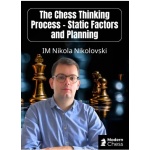
Reviews
There are no reviews yet.